When we want to describe the world around us, we need words. But what happens when we cannot think of the right one? We have all been there. We think of something, but we cannot find the right word. And then we start describing and explaining until the other person knows what we are talking about.
In other situations, we may know several possible terms but be unsure which one fits best. In everyday communication, we often choose the term that feels right. In terminology work, however, the process is different. Before choosing the right term, it is essential to understand the concept it represents. But what exactly is the difference between a concept and a term?
1 What Is the Difference between a Concept and a Term?
In terminology studies, it is important to distinguish between a concept and a term. A concept is the idea or meaning we have in our minds, whereas a term is the word or expression we use to designate that idea. In this context, a term is a designation at the linguistic level, also known as a linguistic designation. There are various types of designations, including symbols, words, and pictograms. What they all have in common is that they depict something or stand for something. They all represent the concept behind them.
The semiotic triangle helps us examine the relationship between a concept and its term more closely. The semiotic triangle also refers to the object, which encompasses things in the real world.
1.1 What Is the Semiotic Triangle?
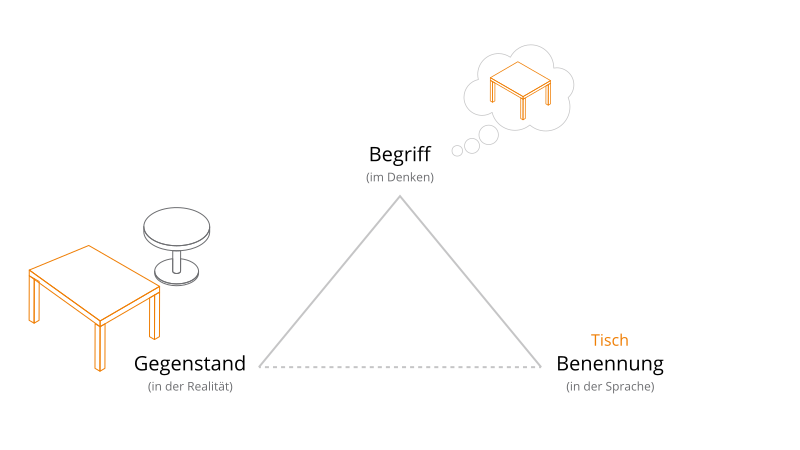
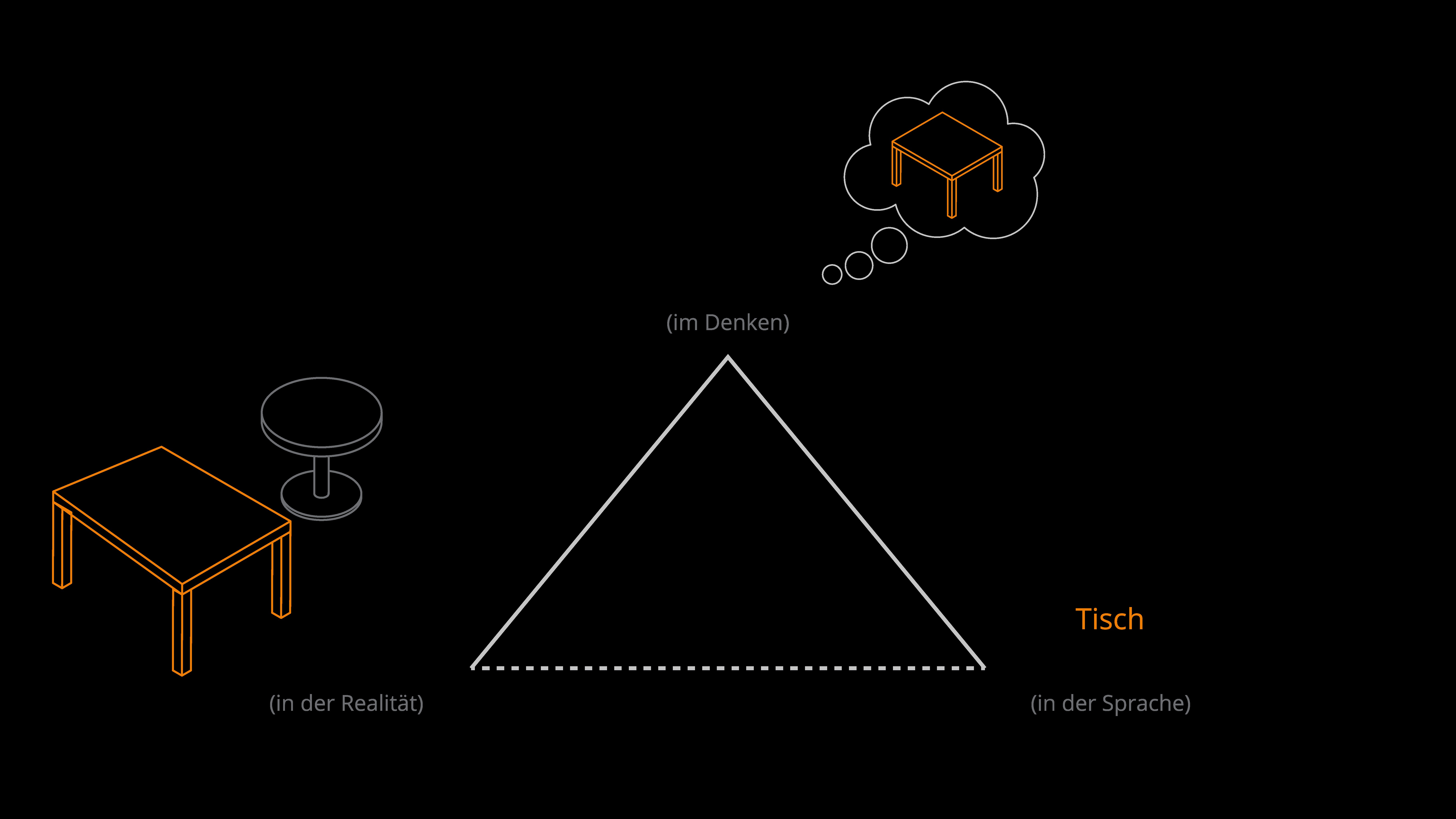
Figure 1 The semiotic triangle using the concept “table” as an example
The semiotic triangle illustrates the relationship between the object, a concept and a term. It shows that a term does not designate an object directly. Instead, the term designates a concept, which is formed on the basis of our understanding of the object. The concept therefore acts as the link between the object and its term.
1.1.1 Components of the Semiotic Triangle
1.1.1.1 What Is an Object?
Objects are parts of the perceptible and imaginable world. They may be material or immaterial. Consequently, processes, events, and fantasy creatures are considered objects, just as much as occurrences and facts.
For instance, feelings, tables, and thunderstorms are all objects.
Objects have properties that make individual objects identifiable and distinguish them from other objects.
For example, a dining table may have a rectangular, horizontal tabletop and four table legs at the corners, whereas a coffee table may have a round, horizontal tabletop and a single table leg in the center.
1.1.1.2 What Is a Concept?
A concept is defined as a unit of thought formed by abstraction based on the common properties of a set of objects. Concepts are independent of language, but they can be influenced by the social and cultural background of a language community.
What Is the Difference between a General Concept and an Individual Concept?
A distinction is made between general concepts and individual concepts. An individual concept is formed based on a single object, whereas a general concept is formed based on more than one object.
For example, “planet” is a general concept, and “Mercury” is an individual concept.
In the previous example, “table” is the general concept, and “dining table” and “coffee table” are each an individual concept.
What Are Concept Characteristics?
Common properties shared by a group of objects can become concept characteristics through abstraction. Characteristics are used to define a concept and distinguish it from other concepts.
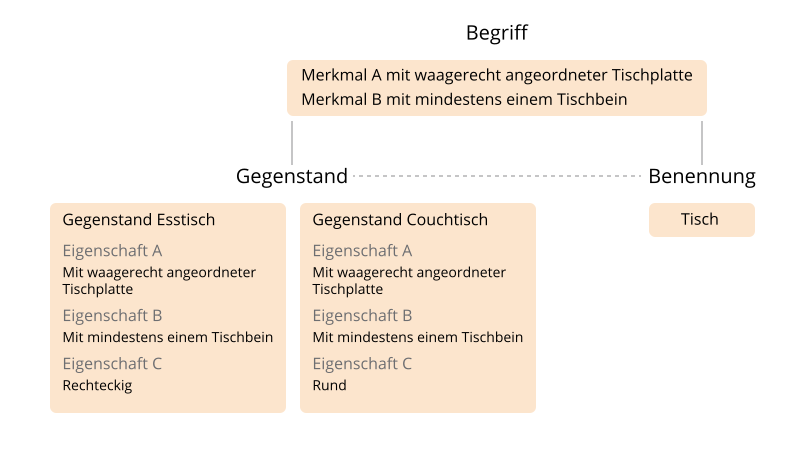
Figure 2 Illustration of the abstraction of concept characteristics from the properties of objects using the semiotic triangle
For example, both a dining table and a coffee table have the properties “has a horizontal tabletop and at least one table leg.” Through abstraction, these shared properties become characteristics of the concept “table”. The properties that are not shared by the dining table and the coffee table remain properties of the individual table and are not considered characteristics of the concept.
1.1.1.3 What Is a Term?
A term is the linguistic designation used to refer to a general concept.
In the previous example, the term “table” is a sequence of letters that designates the concept formed by the characteristics “has a horizontal tabletop and at least one table leg.”
General concepts are designated by terms, whereas individual concepts are designated by proper names.
In the example mentioned above, “table” is the term of the general concept, while “dining table” and “coffee table” are proper names of the individual concept representing individual objects.
1.1.2 How Are the Object, the Concept, and the Term Related?
The semiotic triangle links the object directly to the concept and the concept directly to the term. The dotted line between the object and the term indicates that, although a relationship exists between them, it is indirect rather than direct. If every individual object had its own name, we would need a separate term for each object.
In the previous example, there would be no general term such as “table”. Instead, each individual table would have its own proper name. As a result, whenever we would use “dinning table”, we would refer to the particular table. Likewise, the term “coffee table” would be used just for the particular table.
The object is directly linked to the concept, because the shared properties of a group of objects are transferred to the concept’s characteristics. In other words, concepts are formed through abstraction from real-word-objects.
The concept is directly linked to the term, because a term designates a concept. The term serves as the linguistic representation of that concept.
The relationship between the object and the term can be explained through the concept. When we encounter an object, we recognize it by comparing its properties with the characteristics associated with a concept stored in our mind. Once we have identified the appropriate concept, we can select the corresponding term to name the object. To sum it up, we used the concept to assign the correct term to the object.
Consider the previous example. When we see the dining table, we recognize that it matches the concept characteristics “has a horizontal tabletop and at least one table leg” from the concept “table”. Based on this concept, we identify the appropriate term: “table”. The process proceeds from the object “dining table” to the concepts with its characteristics “has a horizontal tabletop and at least one table leg” and finally to the term “table”.
| Element | Meaning | Example |
|---|---|---|
| object | material or immaterial object | dinning table |
| concept | conceptual unit based on shared characteristics | the concept “table” with the concept characteristics “has a horizontal tabletop and at least one table leg” |
| term | linguistic designation | “table” |
Table 1 Overview of object, concept and term
2 What Types of Relationship Can Exist between a Concept and a Term?
2.1 What Would an Ideal Relationship Look Like?
In terminology studies, there is an ideal vision of a one-to-one relationship between a concept and a term. In other words, each concept is ideally designated by only one term, and each term refers ideally to only one concept. In reality, however, it sometimes happens that a concept is expressed by multiple terms, or that a term designates several different concepts.
2.2 What Is Synonymy?
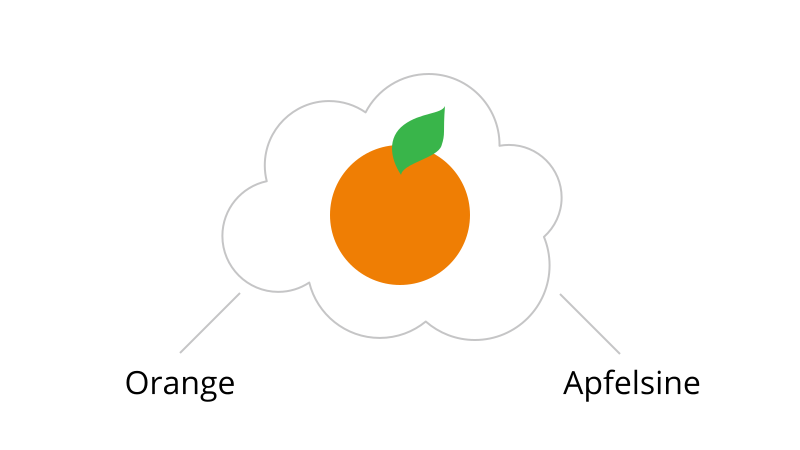
Figure3 Synonymy using the concept “sofe” as an example
When a concept is represented by multiple terms within the same language, this phenomenon is known as synonymy. The two terms are then synonymous with each other. A distinction is commonly made between two types of synonymy.
One type is full synonymy, also known as true synonymy. Full synonymy exists when two basic conditions are met. First, the terms must designate exactly the same concept. In other words, they must refer to a concept with the identical set of concept characteristics. Second, the terms must be interchangeable in all contexts. This means that they can be used regardless of factors such as language register, regional variation, business environment, and standardization requirements.
An example of full synonymy is “sofa” and “couch”. Both terms designate the same concept with the same concept characteristics and can generally be used interchangeably in nearly all contexts.
If one of the conditions for full synonymy is not met, the relationship is referred to as “partial synonymy”. For example, a term may not be interchangeable in all contexts due to dialects and connotations.
An example of partial synonymy is “fall” and “autumn”. Both terms designate the same concept. However, “fall” is primarily used in American English. whereas “autumn” is more common in Britain English. As a result, their usage depends on regional context and that is why “fall” and “autumn” are not fully interchangeable in all contexts.
2.3 What Is Ambiguity?
When a term or several identical terms refer to multiple concepts, this phenomenon is known as ambiguity. The terms are then ambiguous. Two types of ambiguity are distinguished: polysemy and homonymy.
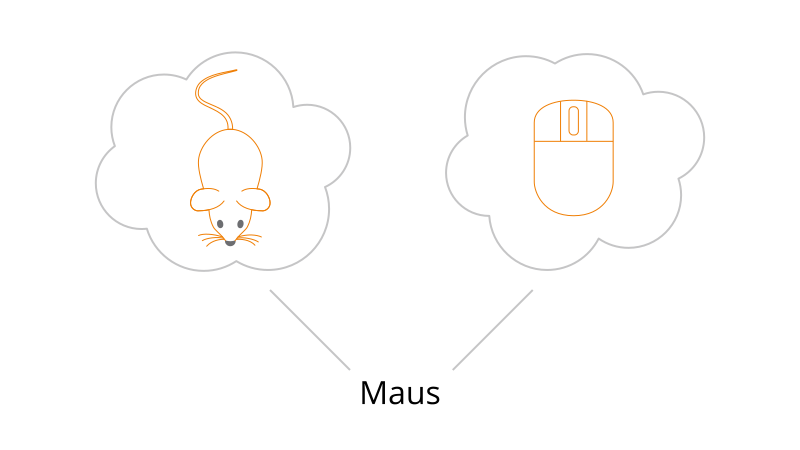
Figure4 Polysemy illustrated by the term “mouse”
Polysemy usually arises through terminologization, the process by which a term from general language is deliberately adopted into technical language because of apperceived similarity.
For example, the term “mouse” originally referred to the animal. Because of its shape and appearance, the same term was later adopted to designate the computer input device. Although the two concepts are different, they remain semantically related because of the similarity.
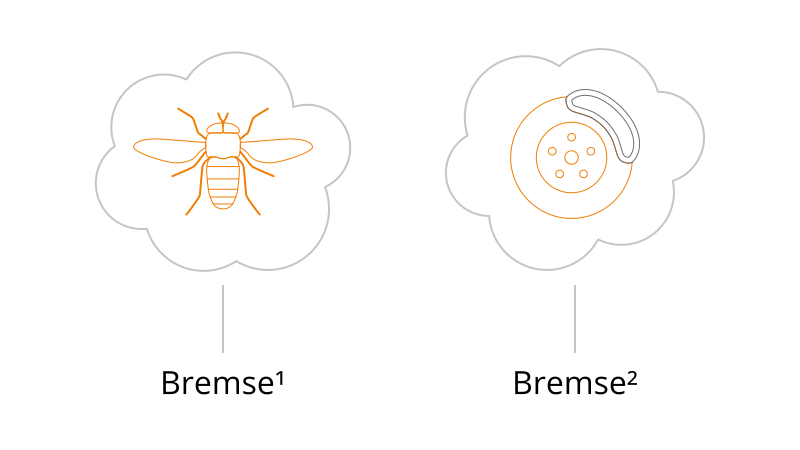
Figure5 Homonymy illustrated by the term “bat”
In homonymy, two identical terms coincidentally designate two different concepts that are unrelated in meaning. The concepts share no semantic connection.
For example, the term “bat” designates the animal or the sport equipment that is used to hit a ball. Although the two concepts share the same form, they are entirely unrelated.
2.4 What Is Equivalence?
Not only within a single language multiple terms can designate a single concept. When considering different languages, as in multilingual terminology work, multiple terms can designate the same concept. This phenomenon is referred to as equivalence. Different types of equivalence can be distinguished
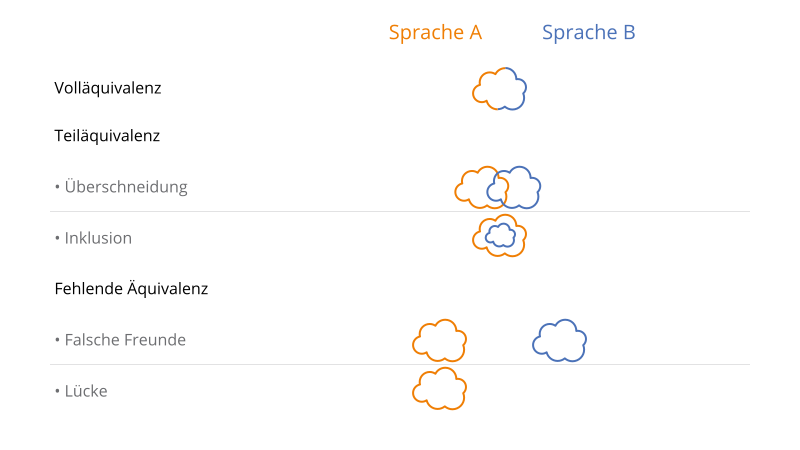
Figure6Types of equivalence between two languages
2.4.1 What Is Full Equivalence?
If the concepts in both languages share exactly the same concept characteristics, this relationship is referred to full equivalence. The concept then exists in both languages and is identical.
2.4.2 What Is Partial Equivalence?
If the concept characteristics in two languages are not exactly the same, the concepts do not correspond completely. This relationship is referred to as partial equivalence. There are two types of partial equivalence.
First, there is overlap. Overlap occurs when the concepts in the respective languages share common characteristics but also possess their own distinct characteristics that are unique to each concept.
An example of overlap is “primary school” in English, which shares identical characteristics with “Grundschule” in German but also has its own distinct characteristics.
On the other hand, there is inclusion. Inclusion means that while the concepts share identical characteristics, the concept in one language has at least one additional characteristic.
An example of inclusion is “screw” in English, since the concept has more characteristics and is therefore more narrowly defined than “Schraube” in German which is more broadly defined.
2.4.3 What Is Zero Equivalence?
Equivalence does not exist when terms in different languages share orthographic or phonetic similarities. This is because the different terms do not necessarily designate the same concept because their terms have a similar form. This is the case with so-called “false friends.” These ones do not share the same concept characteristics. They are simply spelled similarly or sound similar.
An example of a false friend is “brave” in English (meaning “courageous” in German) and “brav” in German (meaning “well-behaved” in English).
Likewise, there is zero equivalence when the concept and its corresponding term exist in only one language. This phenomenon is known as a gap. A distinction is made between two types.
It can happen that one language has a concept with a corresponding term, while in the other language the concept exists but a corresponding term is missing. This is known as a term gap, a designation gap or a lexical gap.
An example of a term gap is “verschlimmbessern” in German. Although this concept exists in the English-speaking world, it is described using several words (to make something worse while trying to improve it). Consequently, there is no true equivalent to the German word “verschlimmbessern”.
However, it can also happen that a concept exists in one language with a corresponding term, but neither the term nor the concept exists in the other language. This is known as a concept gap.
An example of a concept gap is “Gelbe Tonne” or “Gelber Sack” in German. These terms designate a specific waste-collection system for recyclable packaging. In German, both the concept and the term exist. In other language regions where there is no corresponding waste separation system, both the concept and the term are missing.
3 What Types of Terms Are There?
Now that the various relationships between concepts and terms have been clarified, let us take a closer look at terms themselves. Terms are a central component of terminology work. They are collected, maintained and managed in a terminology management system. Terms can take variety of forms.
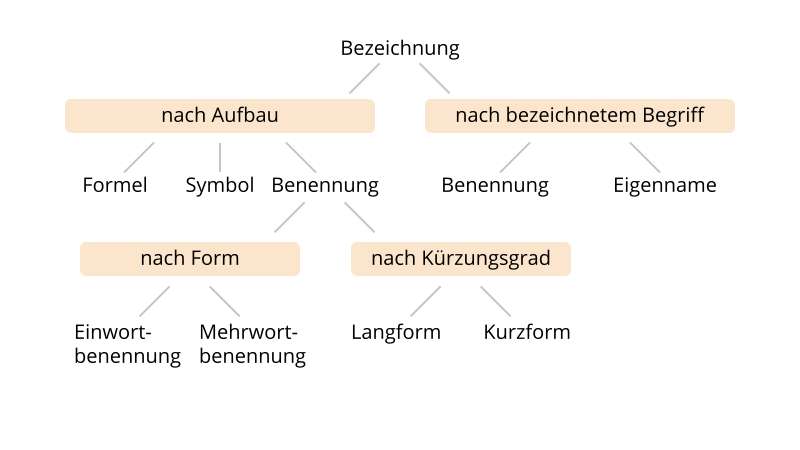
Figure7 Conceptual framework for the term “designation”
3.1 Classification by Form
Terms can be classified according to their form. A term may be either a single-word term or a multi-word term.
3.1.1 What Is a Single-Word Term?
As the name suggests, a single-word term consists of one word. This also includes compound words, including those written with hyphens. There are three types of single-word terms. They can be classified as simplexes, compounds, or derivatives.
A simplex consists of a single lexical morpheme. A morpheme is the smallest unit of a language that carries meaning. There are different types of morphemes, including the lexical morphemes, which form the semantic core of a word and provide the core meaning. Because a simplex contains only one lexical morpheme, it expresses a single semantic unit.
Examples of simplexes are “friend,” “house,” and “table.”
A compound word consists of at least two lexical morphemes. Compounds are formed combining two or more words, each of which has a core meaning that contributes to the overall meaning of the new word.
Examples of compounds are “classroom”, “notebook”, and “tablecloth.”
A derivative consists of a lexical morpheme and one or more derivational morpheme. A derivational morpheme is a word-forming element that creates a new word or changes the meaning of an existing word. It cannot occur independently but must be attached to another morpheme. Derivatives are therefore words formed through derivation.
Examples of this include “friendship,” “disappear,” and “happiness.”
3.1.2 What Is a Multi-Word Term?
A multi-word term consists of at least two words separated by a space.
Examples include “artificial intelligence,” “electrical voltage,” and “technical documentation.”
3.2 Classification by Form Reduction
Terms can also be classified according to the degree of form reduction they exhibit. A term may occur either in its long form or in a short form.
3.2.1 What Is a Full Form?
A full form is the complete, unabbreviated form of a term.
3.2.2 What Is a Short Form?
A short form is a reduced version of the term. Short forms are created by omitting at least one letter or character from the long form or by replacing it with numbers or characters. Common types of short forms are abbreviations, clippings, acronyms and initialisms.
An abbreviation is a shortened form that is primarily used in writing. In spoken language, the full form is often used.
Examples include “Dr.” for “doctor” “e.g.” for “for example” and “St.” for “Saint”
A clipping is a shortened form created by removing a part of a longer word. The omitted part may occur at the beginning, the end, or, less commonly, in the middle of the word. Clippings are pronounced as words and are usually written without a period.
Examples include “Ad” for “advertisement”, “condo” for “condominium”, “lab” for “laboratory”, and “flu” for “influenza”.
Acronyms and initialisms are short forms created from the initial letters of the meaningful elements of a longer or multi-word term.
An acronym is pronounced as a word.
Examples include “NASA” for “National Aeronautics and Space Administration”, “UNESCO” for “United Nations Educational, Scientific and Cultural Organization” and “COVID” for “Coronavirus Disease”.
An initialism is pronounced letter by letter.
Examples include “CD” for “compact disc”, “ATM” for “automatic teller machine” and “PIN” for “personal identification number”.
4 What Role Do Definitions Play?
Terms are not the only way to represent concepts. Concepts can also be expressed through definitions. Definitions make it possible to describe concepts, which exist as units of thought, in linguistic form. For this reason, definitions play a central role in terminology work. But what exactly is a definition?
4.1 What Is a Definition?
A definition describes a concept, serves to distinguish it from other concepts, and to place it within a conceptual system. A conceptual system provides a structured representation of the relationships between concepts.
Applying this to the previously mentioned example of the concept “table”, a definition might read as follows:
A table is a piece of furniture that has a horizontal tabletop and at least one table leg.
This definition uses the concept’s characteristics to define the concept “table”, to distinguish it from other types of furniture such as cabinets and to place it within a conceptual system. Since the definition begins with the superordinate concept “piece of furniture”, the concept “table” is placed as a subordinate concept within a broader category that is already familiar to the reader
4.2 How Does the Definition Relate to the Semiotic Triangle?
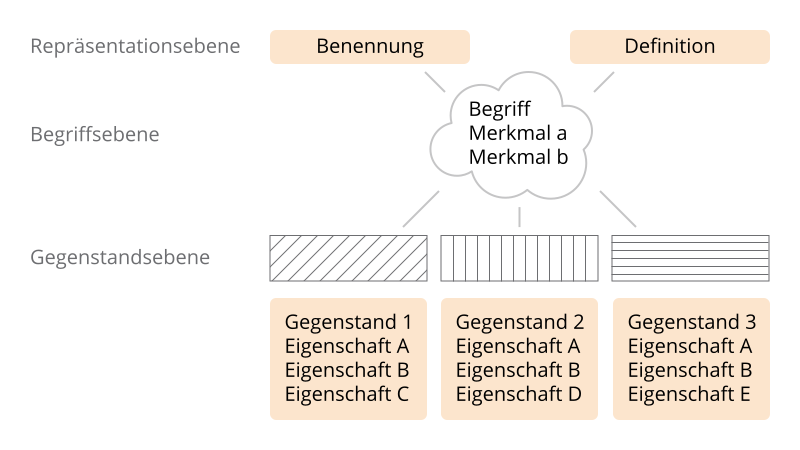
Figure8 Relationship Between Definition and the Semiotic Triangle
Definitions can also be classified within the semiotic triangle. The semiotic triangle consists of three levels. These levels are the representational level, the conceptual level, and the object level. Objects belong to the object level, concepts to the conceptual level, and terms to the representational level. Just like terms, definitions serve to represent concepts. They therefore belong to the representational level as well. While a term identifies a concept through designation, a definition explains the concept by describing its characteristics and making it accessible through language.
| Element | Meaning |
|---|---|
| term | linguistic designation |
| definition | linguistic definition |
| concept | a conceptual unit based on shared characteristics |
| Gegenstanobject | material or immaterial object |
Table:2 Overview: Term, Definition, Begriff, and Subject
5 What Is Terminology Work?
5.1 What Happens to the Concepts and Terms?
Now we can distinguish between concepts and terms. This is the basis of terminology work. Terminology work is the process of establishing and maintaining consistent terminology by assigning appropriate terms to concepts and documenting them in a terminology management system. In this context, terminology refers to the set of concepts and their designations used within a specialized field. The goal of terminology work is to ensure consistent terminology. Consistent terminology means that it is clearly defined which term should be used for each concept. This helps to establish, maintain, and verify a consistent corporate language across products, documentation and communication.
5.2 What Does Terminology Work Involve?
However, practical terminology work involves even more than simply collecting terms. It includes terminology research, terminology analysis, terminology management, and terminology review. Terminology research involves identifying and collecting relevant terms. Terminology analysis involves analyzing concepts, identifying their defining characteristics and documenting them in the form of definitions. In addition, all appropriate terms are assigned to a concept, and the relationships between concepts are identified. Terminology management involves recording, maintaining, and making terminology data available through a terminology management system. Terminology review ensures that established terminology is used correctly and consistently throughout an organization’s content and communication.
6 Concept or Term?
Let us return to the situation described at the beginning: you know what you want to say, but you cannot think of the right word. We can describe this situation more precisely, now that we understand the distinction between concepts and terms. What we are looking for is not the concept itself, but the appropriate term that designates that concept. Until we find that term, we can still communicate the concept by describing and explaining its defining characteristics, much as we would in a definition. In other words, we are looking for a different way to represent the same concept.
Frequently Asked Questions
What is terminology?
Tterminology refers to the set of concepts and their designations used within a specialized field.
What is terminology work?
Terminology work includes terminology research, terminology analysis, terminology management, and terminology review. It is based on the science of terminology.
What is the difference between a concept and a term?
A concept is a unit of thought formed by identifying the common properties of objects from a set of objects through abstraction. A term is the linguistic designation of a general concept from a specialized field. To put simply, the concept is the unit of thought that encompasses all conceptual characteristics, and the term is the linguistic expression that represents the concept.
Is a concept the same as a meaning?
In principle, a concept is a meaning. The concept is defined by its concept characteristics, which determine its content. The concept characteristics specified in the definition indicate what the concept means.
Should only one term be assigned to each concept?
No. A concept can be represented by multiple terms. To ensure consistent corporate language, it is important to collect all relevant and appropriate terms for a concept so that only the term that fits the corporate language is permitted. All other terms are prohibited so that only that one term becomes established for the concept.
Is a term simply a word?
In principle, a term is a word. A term is a linguistic designation that represents the concept by taking the form of one or more words.
Can a term consist of multiple words?
A term can also consist of multiple words. In that case, it is called a multi-word term. A multi-word term consists of at least two words separated by a space. Examples include “linguistic intelligence” and “Congree Control Center.”
What is an abbreviation?
An abbreviation is the shortened form of a term. For example, “AI” is an abbreviation of the full term “Artificial Intelligence”.
Can a concept have multiple terms?
Multiple terms can refer to the same concept. Within a single language, this phenomenon is called synonymy. For example, an abbreviation is synonymous with its full form, since both refer to the same concept. A concept can also be represented by multiple terms in different languages. This is called equivalence.
How do you recognize synonymy?
Synonymy can be recognized by the fact that several terms refer to the same concept and are interchangeable in different contexts. Definitions help to compare the terms based on their defining characteristics and thereby identify synonyms.
Can the same term have different meanings?
A term can have different meanings. When a term represents different concepts, this is referred to as ambiguity. For example, the term “bank” can refer to a financial institution or to a land beside a river or other body of water. The term “bank” thus represents at least two different concepts.
Why are definitions needed?
Definitions serve to specify a concept, distinguish it from others, and place it within a conceptual system. A definition makes it possible to describe a concept by its characteristics and allows one to identify synonyms and equivalents.
What is the difference between a term and a definition?
Both a term and a definition are linguistic representations of a concept. However, a term designates a concept and is therefore its linguistic designation. On the other hand, a definition linguistically specifies the concept, distinguishes it from other concepts, and places it within a conceptual system.
Sources
DIN 2330:2022-07 Terminology Work – Principles and Methods
DIN 2342:2022-07 Terminology Science and Terminology Work – Terms
DIN 2340:2020-11 Abbreviations for Designations and Names
Drewer, Petra / Schmitz, Klaus-Dirk (2017): Terminology Management: Fundamentals – Methods – Tools. Location: Springer Vieweg